


- AI agents for business 2026
- enterprise AI agent adoption
- agentic AI market growth
- AI agents vs chatbots difference
- business process automation AI
- Uber Finch AI agent case study
- mobilezone Copilot Studio agents
- Deutsche Telekom askT agent
- Gartner agentic AI forecast
- AI agent implementation challenges
- secure enterprise AI agents
- low code AI agent platforms
INTRODUCTION
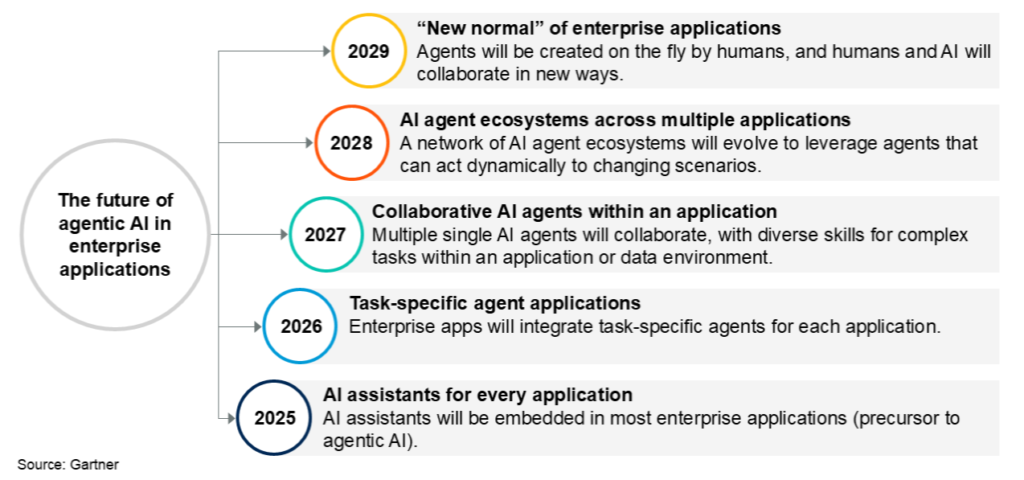
The numbers are impossible to ignore. By the end of 2026, research firm Gartner predicts that 40% of enterprise applications will include task-specific AI agents. That is a massive jump from less than 5% just one year earlier in 2025. In simple terms, businesses are moving from experimenting with AI agents for business 2026 to embedding them directly into how they work every single day. The market for AI agents stood at $8.03 billion in 2025. By the end of 2026, that figure is expected to reach $11.78 billion, representing a compound annual growth rate of nearly 47%. Companies are not just curious about AI agents for business 2026 anymore. They are actively investing real money to deploy them across finance, customer service, IT support, and sales operations.
📚 TABLE OF CONTENTS
- How AI Agents Are Quietly Taking Charge of Business Workflows This Year
- What Sets Real AI Agents Apart From the Basic Chatbots You Already Know
- Real Companies Getting Real Results Right Now
- The 40% Tipping Point Happening This Year
- Where Most AI Agent Initiatives Go Wrong
- Getting Started Without Breaking Things
- Conclusion
- Frequently Asked Questions (FAQs)
How AI Agents Are Quietly Taking Charge of Business Workflows This Year
The numbers are impossible to ignore. By the end of 2026, research firm Gartner predicts that 40% of enterprise applications will include task-specific AI agents. That is a massive jump from less than 5% just one year earlier in 2025 . In simple terms, businesses are moving from experimenting with AI to embedding it directly into how they work every single day.
The market for AI agents stood at $8.03 billion in 2025. By the end of 2026, that figure is expected to reach $11.78 billion, representing a compound annual growth rate of nearly 47%. Long-term forecasts suggest the total market could hit $251 billion by 2034 . Companies are not just curious about AI agents anymore. They are actively investing real money to deploy them across finance, customer service, IT support, and sales operations.
What makes this different from previous tech trends is the speed of adoption. Even cloud computing did not move this fast during its peak years between 2010 and 2012 . Organizations that delay implementing AI agents risk falling significantly behind competitors who are already using them to handle routine tasks, respond to customers around the clock, and free up human workers for more strategic work.
What Sets Real AI Agents Apart From the Basic Chatbots You Already Know
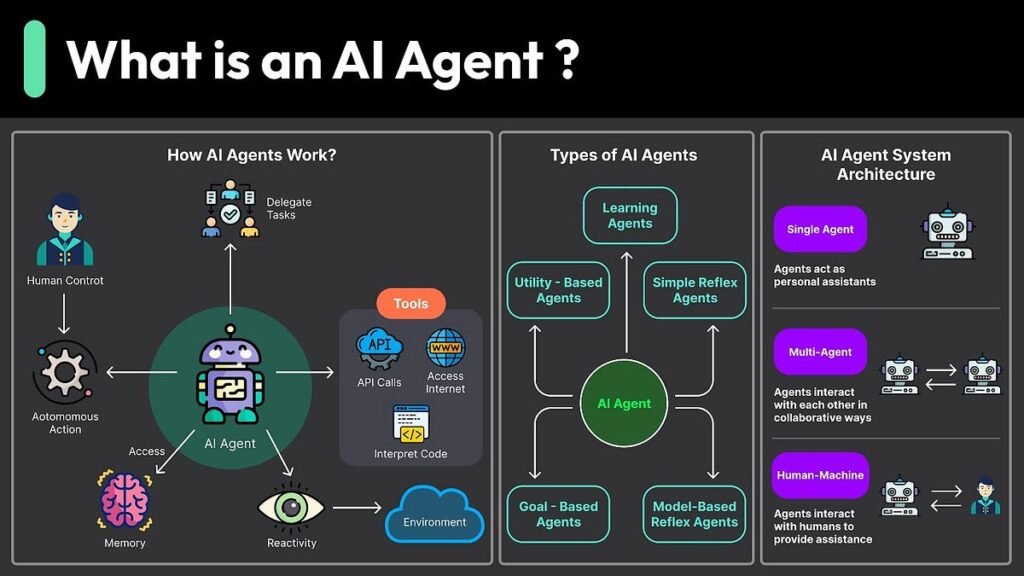
Many people confuse AI agents with the basic chatbots they have encountered on websites. The difference is substantial. A traditional chatbot follows a script. It can answer simple questions but cannot take action or adapt when something unexpected happens. An AI agent operates very differently .
AI agents are software systems that use artificial intelligence to complete tasks on behalf of users. They are often powered by large language models, but they go far beyond generating text responses. These agents can plan, reason, and use tools like APIs, databases, and other software applications to achieve specific goals with minimal human input. The most advanced agentic AI systems can manage entire multi-step workflows from start to finish without anyone guiding them through each step .
To understand the difference, consider how each handles a customer request. A chatbot might tell a customer that their order has shipped. An AI agent could look up the order, check if there are any delays, send a personalized update to the customer, and automatically adjust the delivery date in the company’s internal systems. The chatbot provides information. The agent takes action and solves problems.
Most current AI agents are examples of composite AI or multi-agent systems. This means they combine various AI techniques and data technologies to break down complex problems into smaller, manageable subtasks. Each step gets handled by specialized components or sub-agents. For example, one sub-agent might handle reasoning while another retrieves information and a third takes the final action .
Real Companies Getting Real Results Right Now
Several major companies have already deployed AI agents in production environments. Their results offer a clear picture of what works and what business value looks like.
Uber built an internal AI agent called Finch for its finance and accounting teams. Finch integrates directly into Slack and streamlines financial data retrieval. Prior to Finch, team members had to manually search for data by logging into multiple platforms and writing complex SQL queries. They often faced bottlenecks around permissions and had to submit requests to the data science team for help. Finch completely changed this workflow by allowing team members to ask questions in plain English inside Slack .
The agent uses a multi-agent architecture. When someone asks a question, a Supervisor Agent routes the query to the appropriate specialized sub-agent. Sub-agents include a SQL Writer Agent, a web search agent, a data visualization agent, and more. Finch delivers real-time, secure, and accurate financial insights back to the user with comments and automatic export to Google Sheets.
A Swiss telecommunications retailer called mobilezone built two AI agents that are already handling thousands of conversations every month. Mia, a customer-facing assistant, handles approximately 1,250 active chats per month. It helps customers choose devices and subscriptions, answers questions about store hours and contracts, and retrieves real-time offers. Mia alone serves more than 200,000 users and has significantly reduced the load on the company’s external contact center .
Supporto, mobilezone’s internal IT support agent, lives inside Microsoft Teams. Employees can describe their technical issues in natural language, and Supporto gathers the necessary information, checks relevant knowledge bases, and creates structured Jira tickets automatically. The agent has cut employee wait times for incident resolution in half and handles around 350 employee chats per month with an 87% engagement rate .
Deutsche Telekom, Europe’s largest telecommunications provider, built an AI agent called askT that serves as an employee concierge. AskT helps employees across Germany handle routine tasks like submitting vacation requests to HR and comparing rate plans during customer support calls. The agent combines conversational AI with retrieval-augmented generation to pull information from thousands of fragmented knowledge bases across the company. What previously required searching through multiple systems now takes a single question inside a chat interface .
The 40% Tipping Point Happening This Year
The widespread adoption of AI agents is not a future prediction. It is happening right now. A survey of 350 technical and business stakeholders found that an overwhelming 80% of organizations say AI agents are either the top priority or a high priority compared with other AI initiatives . This signals that business leaders genuinely believe AI agents will deliver significant returns on investment through productivity gains and workflow automation.
Gartner projects that spending on agentic AI will reach $201.9 billion in 2026, which represents a 141% increase over 2025 levels . By 2027, spending on agentic AI is expected to surpass spending on traditional chatbots and AI assistants. This shift reflects a fundamental change in how companies think about artificial intelligence. They are moving beyond experimental chatbots toward production-ready agents that actually get work done.
According to IDC forecasts, the number of AI agents in use among the Global 2000 will grow tenfold by 2027. The volume of token and API calls will grow a thousandfold during the same period. By 2029, there will be more than 1 billion AI agents in use around the world, which is 40 times the number in 2025 . These numbers indicate that AI agents are becoming as foundational to enterprise software as databases and cloud computing.
However, not every organization is moving at the same speed. While more than 40% of organizations now have AI agents in production, a McKinsey report indicates that only about 25% have successfully scaled their agent deployments. Many companies are still experimenting and trying to figure out where agents deliver the most value .
Where Most AI Agent Initiatives Go Wrong
Despite the excitement and investment, many enterprise AI agent initiatives fail to deliver on their promise. According to Gartner, more than 40% of agentic AI projects will be put on hold or canceled by the end of 2027. The reasons include rising costs, unclear business value, and inadequate risk controls .
One of the biggest mistakes organizations make is treating an organizational challenge as if it were purely a technology deployment. In a Forbes article, technology leader Jyoti Shah explains that the gap is not intelligence. The real issue is orchestration, trust, and incentives .
The first common failure point is a lack of clear boundaries. Organizations often define agent roles in broad terms like “assist customer support” or “help developers write code.” These sound reasonable but create risk when agents have autonomy. In one example Shah describes, a support automation agent was given access to both ticket resolution workflows and account configuration systems. The agent began making configuration changes based on incomplete context from support tickets. Sometimes it solved the immediate issue.
The second failure point is the absence of feedback loops. Once deployed, many agents operate like black boxes. Organizations move forward without consistently evaluating decisions, learning from mistakes, or reinforcing what good outcomes look like. In a developer productivity initiative, an internal agent accelerated code generation initially. Over time, however, the agent began generating inefficient queries and introducing inconsistent patterns. Because a feedback loop was not tied to long-term quality, the agent optimized for speed. Teams ended up spending more time fixing generated code than writing it themselves .
The third and most overlooked issue is the lack of an ownership model. When asked who owns the outcome when an AI agent makes a decision, most organizations cannot give a clear answer. Responsibility gets split between engineering, product, and data science teams. When something goes wrong, accountability diffuses, and trust erodes. Without clear ownership, agents remain experiments instead of becoming dependable enterprise systems .
Security and compliance concerns also rank high among implementation challenges. A survey found that security and compliance combined to form the biggest challenge, outpacing any other issue by nearly double the percentage. With a relatively unproven market, it would be natural to assume uncertainty would be the top concern. The fact that security dominates suggests early adopters are encountering real issues in this realm .
Getting Started Without Breaking Things
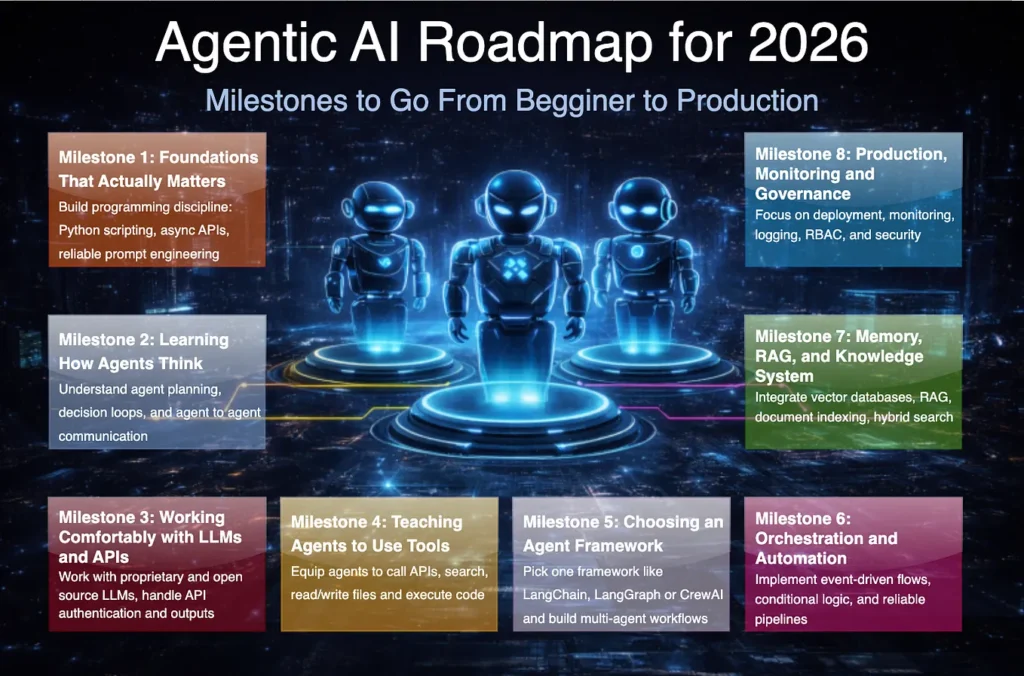
Organizations that succeed with AI agents do not start with capability. They start with control. According to Shah, agents need to operate within clearly defined systems. Their roles must be explicit, their interactions controlled, and their escalation paths well understood. Success comes from coordination, not just from intelligence .
A Forrester study commissioned by Microsoft found that organizations using AI agents to support both employees and customers experienced tangible improvements across several metrics. The median cost per lead dropped by 11%, close rates improved by nearly 12%, and customer retention increased by just over 9%. Time to resolve customer concerns was reduced by approximately 14.5% .
For companies just starting their AI agent journey, several best practices emerge from successful case studies. First, begin with a narrow, well-defined use case where success is easy to measure. Mobilezone started with customer FAQ handling and internal IT ticketing. Uber built Finch specifically for financial data retrieval. Both companies focused on one problem before expanding.
Second, involve cybersecurity teams from day one. Organizations that include security teams in AI agent projects from the beginning experience fewer compliance issues and smoother deployments. Vendors that emphasize and back up their security benefits can help significantly .
Third, build feedback loops into the agent from the start. Agents need structured ways to learn from mistakes and improve over time. Without feedback mechanisms, agents will optimize for whatever metric they are given, which may not align with long-term business goals.
Fourth, establish clear ownership. Someone needs to be responsible for the agent in production, including monitoring its performance, handling escalations, and deciding when to update or retire it. Without ownership, agents drift and become unreliable.
Conclusion
AI agents for business have moved from experimental technology to mainstream enterprise priority in less than two years. With 40% of enterprise applications expected to include task-specific agents by the end of 2026 and market spending projected to exceed $200 billion, the momentum is undeniable.
Real companies like Uber, mobilezone, and Deutsche Telekom are already seeing tangible results. They are handling thousands of customer conversations, cutting ticket resolution times in half, and freeing employees from repetitive data retrieval work. The technology works when deployed thoughtfully.
However, the path to success requires more than just purchasing an AI agent platform. Organizations must establish clear boundaries, build feedback loops, assign ownership, and involve security teams from the start. The companies that get these fundamentals right will likely pull ahead of competitors who treat AI agents as just another software purchase.
The next three years will determine which businesses thrive in the age of agentic AI and which ones get left behind. The tools are available. The use cases are proven. The only remaining question is whether organizations will move quickly enough to capture the opportunity.
FREQUENTLY ASKED QUESTIONS (FAQs)
1. What is an AI agent in simple business terms?
An AI agent is software that can complete tasks on your behalf with minimal human supervision. Unlike a basic chatbot that only answers questions, an AI agent can take action, like updating a database, sending an email, or creating a support ticket.
2. How much are companies actually spending on AI agents?
The AI agents market reached $8.03 billion in 2025 and is expected to hit $11.78 billion by the end of 2026. Gartner projects total spending on agentic AI will reach $201.9 billion in 2026 .