

- Apple Google Gemini partnership 2026
- WWDC 2026 Apple Intelligence
- Siri AI Google Gemini
- Apple Private Cloud Compute
- iOS 27 AI features
- Apple Foundation Models Gemini
- NVIDIA Blackwell Apple Google Apple Intelligence architecture
- Google Gemini iPhone integration
- Apple AI privacy protection
- Xcode 27 Gemini integration
- Siri screen awareness
- Apple Google AI deal
INTRODUCTION :
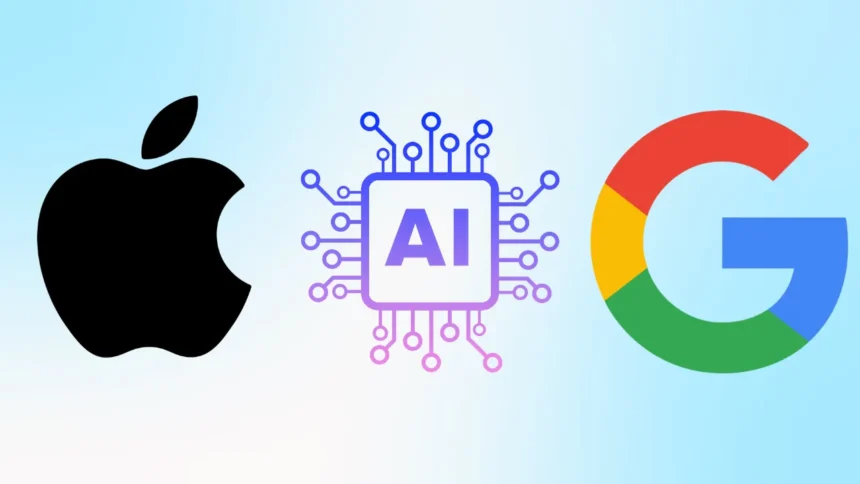
The Apple Google Gemini partnership 2026 has completely rewritten the rules of competition in the tech industry. For nearly two decades, Apple and Google fought as bitter rivals. One makes the iPhone. The other makes Android. One controls the App Store. The other runs Google Play. But on June 8, 2026, those old battle lines disappeared at WWDC 2026. That is when Apple announced its new AI architecture built around Google’s Gemini models. This Apple Google Gemini partnership 2026 marks the first time Apple has handed over such a critical piece of its software to an outside company. The result changes everything about how Siri works, how developers build apps, and how Apple protects user privacy.
📚 TABLE OF CONTENTS
- Apple and Google Join Forces in Historic AI Partnership
- How the New AI Architecture Actually Works
- Siri AI Gets a Complete Brain Transplant
- Privacy First: How Apple Protects Your Data on Google’s Servers
- How App Makers Benefit From the Apple Google AI Deal
- Why Apple Partnered With a Rival Instead of Going Alone
- Conclusion
- Frequently Asked Questions (FAQs)
Apple and Google Join Forces in Historic AI Partnership
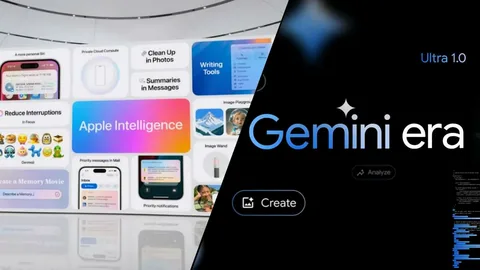
At the Worldwide Developers Conference (WWDC) 2026 held on June 8, Apple made an announcement that sent shockwaves through the technology industry. The company revealed a groundbreaking strategic partnership with Google to reshape how artificial intelligence operates on Apple devices .
This collaboration marks a dramatic departure from Apple’s traditional approach of keeping everything in-house.For a long time, Apple took great pride in building its own processors, creating its own operating systems, and keeping every part of the user experience under its own roof.But when it came to advanced AI, even Apple had to admit that going alone was no longer the best path forward.
Craig Federighi, Apple’s senior vice president of Software Engineering, explained the partnership during the keynote in simple terms.“What we have done this year is enter into a major partnership with Google, making use of the Gemini family of models,” Federighi announced.That single sentence officially ended years of intense rivalry between the two tech giants in the artificial intelligence space.
How the New AI Architecture Actually Works
The new architecture is not as simple as Apple just using Google’s models. Instead, Apple has designed a layered system that combines the best of both companies’ technologies.
The Three Layers of Apple’s New AI Architecture
| Layer | What It Does | Where It Runs |
|---|---|---|
| On-Device Models | Basic AI tasks like dictation, natural language understanding, and screen awareness | Directly on your iPhone, iPad, or Mac |
| Private Cloud Compute | Complex processing that requires more computing power | Apple’s own secure servers |
| Google Cloud with NVIDIA GPUs | Highly complex reasoning and agentic tasks that need maximum computing power | Google’s data centers running on NVIDIA Blackwell B200 chips |
The system works like a smart traffic controller. When you ask Siri a simple question, your device handles it locally. For something more complex that still fits within privacy boundaries, Apple’s own Private Cloud Compute servers take over. But for truly difficult tasks that require advanced reasoning, the request gets routed to Google Cloud, where it runs on NVIDIA’s latest Blackwell B200 data center graphics chips running a licensed version of the Gemini model .
Apple has also introduced a new component called a “system orchestrator” that acts as the central brain of this entire operation. This orchestrator decides which capability to use based on what app you are currently using and what specific task you need to accomplish .
Siri AI Gets a Complete Brain Transplant
The most visible change for everyday users will be a completely overhauled Siri, now referred to as “Siri AI.” This is not just a small update to the existing assistant. Apple has rebuilt Siri from the ground up using the new Gemini-powered architecture.
What the New Siri AI Can Do ?
- Screen awareness :
Siri can now see and understand what is displayed on your screen across various applications. If you are looking at concert tickets, you can ask Siri to add them to your calendar without specifying any details .
- Multi-step commands :
You can give Siri complex instructions like “Find photos from my trip to the beach last summer with the kids and message them to Mom.” The assistant will handle each step automatically.
- Personal context understanding :
Siri can pull information from your Mail, Messages, and Calendar to answer questions about your family’s schedules, flights, or lunch plans .
- More natural voice :
The assistant now speaks with more expressive and natural language, making conversations feel less robotic and more human.
The new Siri also has its own dedicated app, and when it is activated, a prominent bubble pops up on the Dynamic Island at the top of the screen . This visual indicator makes it clear when the assistant is listening and processing your requests.
Privacy First: How Apple Protects Your Data on Google’s Servers
The biggest concern for anyone hearing about this partnership is obvious: does giving Google access to Apple user data violate everything Apple has stood for regarding privacy? Apple anticipated this question and built several layers of protection before announcing the deal.
Apple introduced a specialized system called “Private Cloud Compute” (PCC) specifically for this integration. Originally, PCC only ran on Apple’s own servers using Apple silicon. However, Apple has now expanded PCC to run on Google Cloud systems that use NVIDIA GPUs .
Apple’s Four Privacy Guarantees
| Guarantee | What It Means |
|---|---|
| Stateless computation | Your data is not stored after your request is processed |
| No privileged runtime access | Even Google employees cannot access the data being processed |
| Non-targetability | No one can single out your specific request from others |
| Verifiable transparency | External security experts can inspect the system |
Here is how it works in practice. When you make a request that needs cloud processing, your data is encrypted and sent through Apple’s end-to-end encrypted servers. It then enters an isolated hardware environment on Google’s servers called NVIDIA Confidential Computing. In this environment, your data remains encrypted even while it is being actively processed .
Apple has also created a cryptographically verifiable ledger of all Google Cloud hardware that is part of the PCC fleet. This ledger helps prevent supply chain attacks where someone might try to insert malicious components into the servers.
How App Makers Benefit From the Apple Google AI Deal
The partnership between Apple and Google is not just about making Siri smarter. It also opens up new possibilities for developers who build apps for Apple’s platforms.
Apple has introduced a new Core AI framework that lets developers run other models locally using Apple silicon. More importantly, the existing Foundation Models framework now accepts images as input in addition to text .
Google has integrated Gemini directly into Xcode 27, Apple’s development environment. Developers can enable Gemini through the Intelligence settings panel to review code, fix bugs, and build new features without leaving Xcode . This makes Google’s AI a native part of the Apple development toolchain.
For developers who are part of the App Store Small Business Program with fewer than 2 million total first-time App Store downloads, Apple has offered a significant incentive. These developers can access the next generation of Apple Foundation Models running on Private Cloud Compute at no cloud API cost .
However, there is one major limitation that developers and users in Europe need to know. Siri AI will not ship on iPhone or iPad in the European Union at launch. Apple attributes this gap to the Digital Markets Act, the European regulation that imposes strict requirements on large technology platforms .
Why Apple Partnered With a Rival Instead of Going Alone
For a company as famously controlling as Apple, partnering with Google on something as fundamental as AI raises obvious questions. Why did Apple not just build everything itself?
The answer lies in what happened with the first version of Apple Intelligence. Apple introduced Apple Intelligence in 2024 as its answer to ChatGPT and Microsoft’s Copilot. However, customers and critics said the shipped features were lightweight. Writing tools, Image Playground, and small add-ons did not compare to what competitors were offering
Apple executives later acknowledged that the team had built two versions of Apple Intelligence. The first version did not meet internal expectations, so they paused and concentrated on building a second, more capable architecture. That pause opened the door for a strategic choice. Rather than rushing to catch up, Apple evaluated potential partners and concluded that Google’s Gemini offered the most capable foundation for its next stage of AI development .
The partnership also makes financial sense. Google already pays Apple billions of dollars annually to remain the default search engine on Safari. Expanding the relationship to include AI deepens this financial tie while giving both companies something they need.
Conclusion
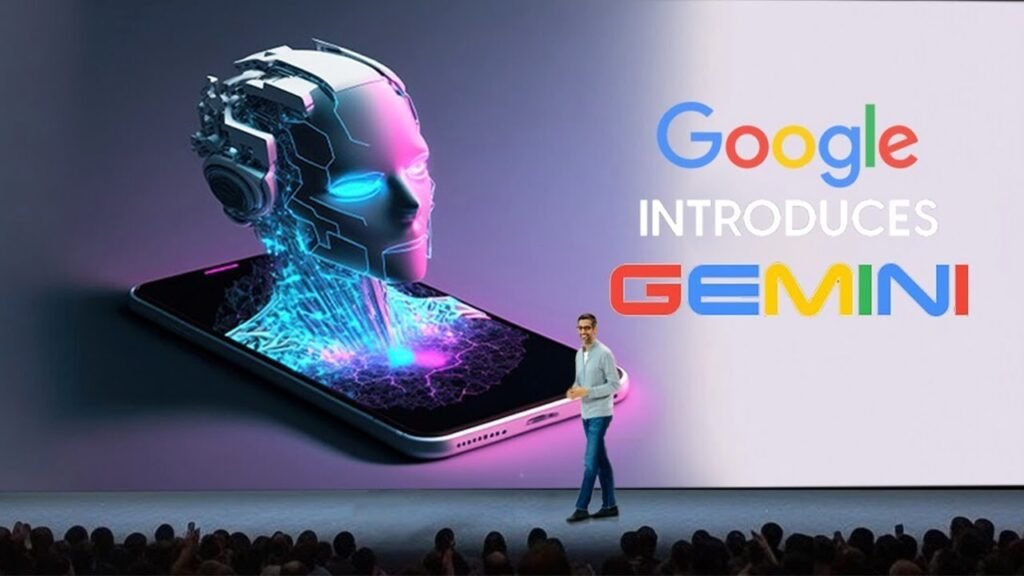
Apple’s decision to build its new AI architecture around Google Gemini models represents a fundamental shift in how the company approaches technology development. The Apple that once insisted on controlling every piece of its software and hardware has admitted that even it cannot go alone in the age of advanced artificial intelligence.
The new architecture is clever in its design. Simple tasks stay on your device. Medium complexity tasks go to Apple’s own secure servers. Only the most difficult requests that require advanced reasoning ever touch Google’s infrastructure. And throughout this entire process, Apple has built multiple layers of privacy protection to ensure that user data remains secure.
For users, the changes will be noticeable. Siri will finally become the assistant Apple promised years ago. It will understand context, remember personal information, and complete complex tasks without step-by-step instructions. For developers, the new frameworks and Gemini integration in Xcode open up new possibilities for building intelligent applications.
The partnership also raises interesting questions about the future of the technology industry. Two of the biggest rivals in mobile technology are now working together on one of the most important technologies of the coming decade. Whether this collaboration expands or remains limited to AI remains to be seen.
FREQUENTLY ASKED QUESTIONS (FAQs)
1. Does this mean Google can see my personal data?
No. Apple has built a privacy layer called Private Cloud Compute that keeps your data encrypted even while it is being processed on Google’s servers. Google cannot access your raw data.
2.What is the release date for the upgraded Siri?
The new Siri AI will launch with iOS 27 and macOS Golden Gate, expected in September 2026 alongside the next-generation iPhone lineup.
3. Will the new AI features cost extra?
Apple has not announced any additional fees for consumers. For developers with fewer than 2 million downloads, Apple is offering free access to cloud-based Apple Foundation Models.
4. Why is Apple not using its own AI models?
Apple’s first version of Apple Intelligence did not meet internal quality standards. Rather than waiting years to catch up, Apple decided to partner with Google, which already has mature AI technology.
5. Will this work on my current iPhone?
The most advanced on-device features will require Apple’s latest chips. Some features may be limited to newer devices. Apple has not yet published a full compatibility list.