


- Spatial computing
- Immersive technology
- Augmented reality
- Virtual reality
- Mixed reality
- Digital transformation
The New Digital Frontier :
Spatial computing represents a revolutionary shift in how humans interact with technology. By seamlessly blending digital content with our physical environment, this technology is creating new possibilities across numerous sectors. From healthcare to manufacturing, immersive technologies are reshaping traditional processes and opening doors to unprecedented innovation.
Understanding Spatial Computing :
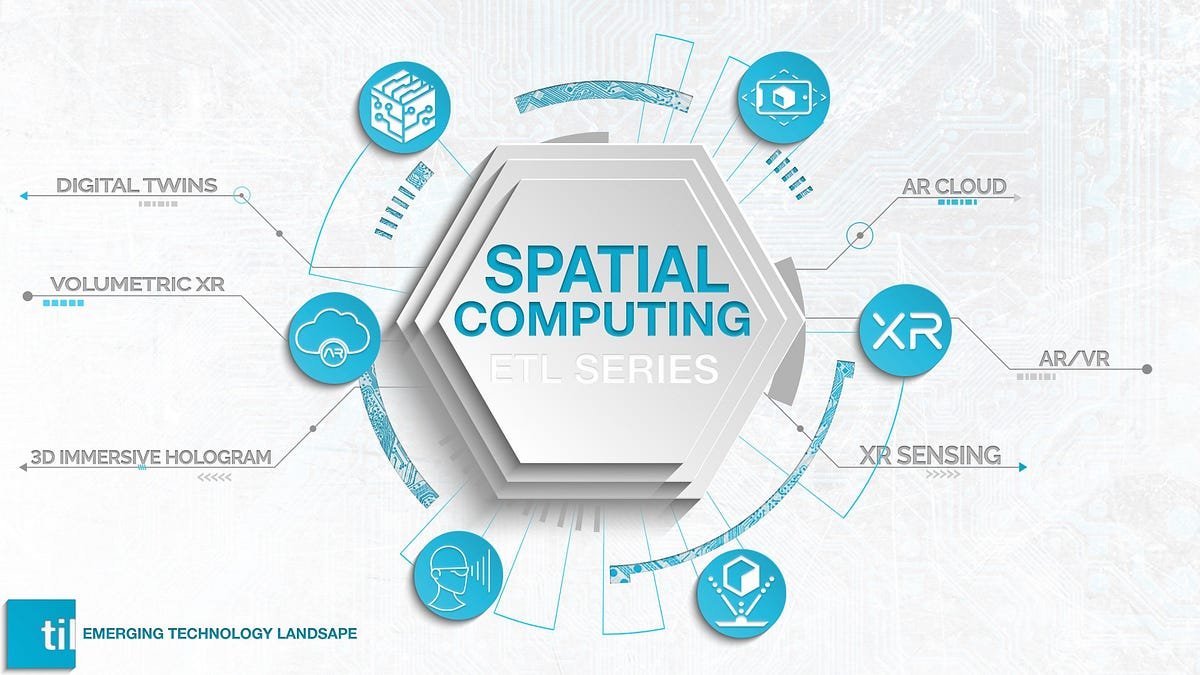
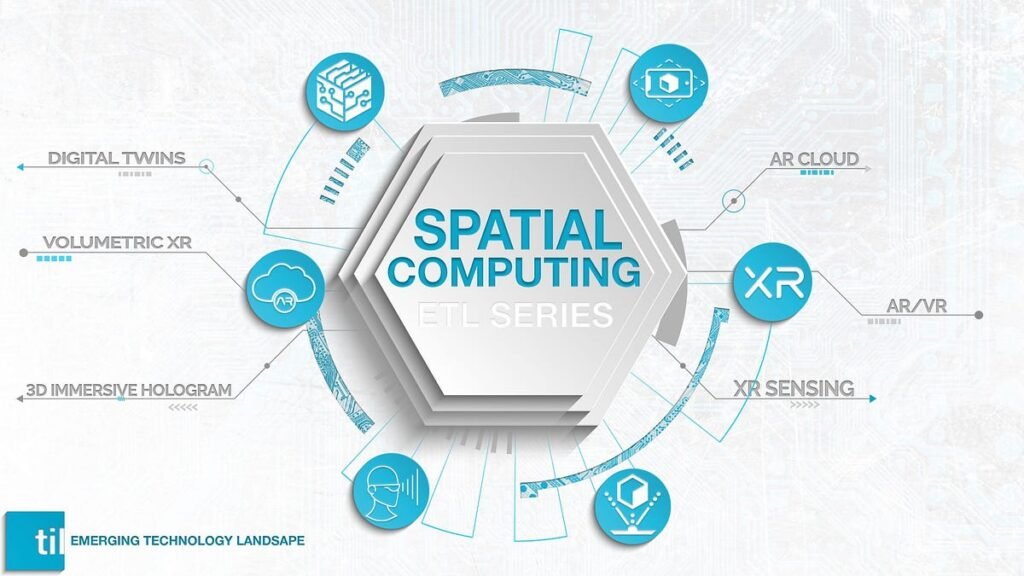
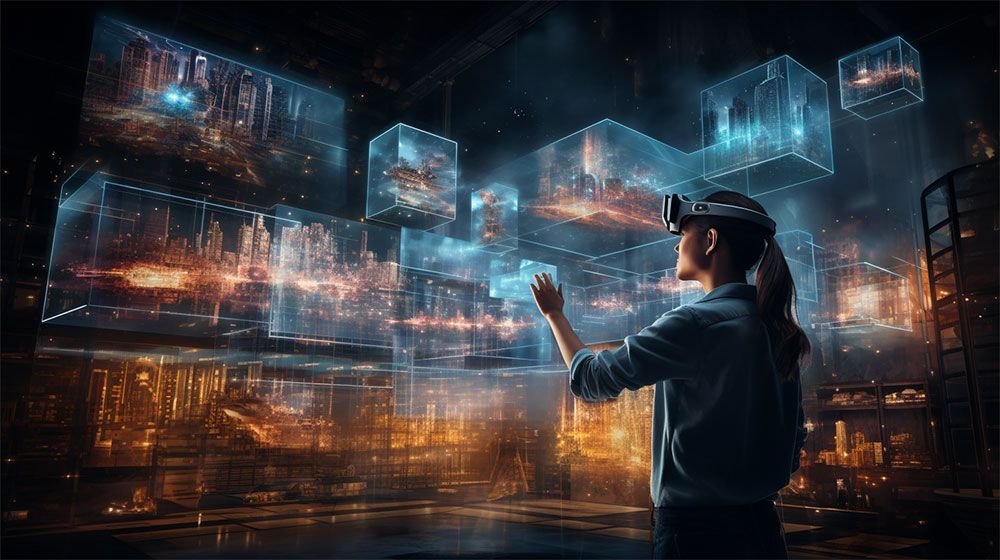
Spatial computing refers to technologies that allow computers to understand and interact with the three-dimensional space around us. Unlike traditional computing confined to screens, spatial computing integrates digital information directly into our physical environment. This technology combines augmented reality, virtual reality, and mixed reality to create immersive experiences that feel natural and intuitive to users.
Key Technologies Driving the Revolution :-
1.Augmented Reality (AR) :
AR overlays digital information onto the real world through devices like smartphones, tablets, or smart glasses. Popular applications include navigation aids that project directions onto streets and furniture apps that let users visualize products in their homes before purchasing.
2.Virtual Reality (VR) :
VR creates completely immersive digital environments that replace the physical world. Using headsets and motion controllers, users can explore virtual spaces for training, entertainment, or therapeutic purposes. Modern VR systems offer increasingly realistic experiences with improved visual fidelity and haptic feedback.
3.Mixed Reality (MR) :
MR blends elements of both AR and VR, allowing digital objects to interact with the physical environment. Users can manipulate virtual objects as if they were physically present, enabling applications in design, education, and collaborative work.
Industry Applications and Use Cases :-
1.Healthcare and Medicine :
Surgeons use AR overlays during complex procedures to visualize anatomy in real-time. Medical students practice surgeries in VR environments, while patients use immersive therapy for pain management and rehabilitation. These technologies are improving outcomes and reducing risks in medical practice.
2. Manufacturing and Design :
Engineers and designers use spatial computing to visualize prototypes at full scale before production. Factory workers receive AR instructions that overlay assembly guidance directly onto equipment. Maintenance technicians use AR glasses to access schematics and repair instructions while keeping their hands free.
3.Education and Training :
Immersive technologies are transforming learning experiences. Students can explore historical sites through VR field trips or interact with complex molecular structures in 3D space. Corporate training programs use simulated environments to teach dangerous procedures without risking actual equipment or personnel.
Benefits and Advantages :-
1.Enhanced Learning and Retention :
Immersive experiences improve information retention by engaging multiple senses simultaneously. Studies show that spatial computing can increase learning efficiency by up to 30% compared to traditional methods.
2. Improved Efficiency and Accuracy :
By providing contextual information directly in the work environment, spatial computing reduces errors and speeds up complex tasks. Technicians complete repairs faster with AR guidance, while designers identify issues earlier in the development process.
3. Remote Collaboration :
Spatial computing enables new forms of remote collaboration where team members can interact with shared 3D models and environments regardless of their physical location. This capability has become particularly valuable in the era of distributed workforces.
Challenges and Considerations :-
1.Technical Limitations :
Current devices face challenges with battery life, processing power, and display resolution. Creating comfortable, lightweight hardware that can handle complex spatial computations remains a significant engineering challenge.
2. User Experience Design :
Designing intuitive interfaces for 3D environments requires new approaches and principles. Developers must consider factors like motion sickness, accessibility, and natural interaction patterns to create comfortable user experiences.
3. Privacy and Security :
As these technologies collect detailed information about users’ environments and behaviors, concerns about data privacy and security become increasingly important. Establishing trust through transparent data practices is crucial for widespread adoption.
Future Trends and Developments :-
1.Wearable Technology Evolution :
Next-generation smart glasses and haptic devices will become lighter, more powerful, and more affordable. Advances in display technology will enable longer battery life and higher resolution experiences.
2. AI Integration :
Artificial intelligence will enhance spatial computing by enabling more natural interactions and smarter contextual understanding. AI-powered systems will better recognize objects, understand speech commands, and predict user intentions.
3. Enterprise Adoption :
Business applications will drive much of the near-term growth in spatial computing. From virtual showrooms to remote assistance, companies are finding practical ways to integrate these technologies into their operations.
Conclusion:
Spatial computing and immersive technologies represent a fundamental shift in our relationship with digital information. As these technologies mature, they will increasingly become invisible and intuitive parts of our daily lives. The successful integration of spatial computing will require collaboration across disciplines, thoughtful consideration of ethical implications, and continuous improvement of both hardware and software. By embracing these technologies responsibly, we can create more engaging, efficient, and meaningful ways to work, learn, and connect with each other.
Question for Readers:
Which industry do you believe will be most transformed by spatial computing in the next five years, and what specific applications excite you the most? Share your thoughts below!