




- Pakistan hyperspectral satellite
- HS-1 launch
- Suparco space mission
- Environmental monitoring
- Pakistan-China space cooperation
A Historic Achievement in Space Technology :
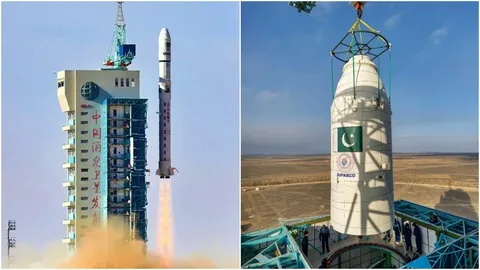
Pakistan has achieved a remarkable milestone in its space exploration journey with the successful launch of its first hyperspectral satellite, HS-1. The spacecraft lifted off from China’s Jiuquan Satellite Launch Centre, with live coverage broadcast from Suparco’s Karachi complex. This landmark achievement positions Pakistan among the select group of nations capable of utilizing advanced hyperspectral imaging technology for national development and environmental protection.
Successful Launch and Initial Operations :
The HS-1 satellite has successfully entered its designated orbit, beginning a new chapter in Pakistan’s space capabilities. According to Suparco officials, the satellite will undergo comprehensive in-orbit testing for up to two months before becoming fully operational. Pakistani scientists and engineers actively participated in the final launch preparations, demonstrating the country’s growing technical expertise in space technology. This hands-on involvement marks a significant step toward self-reliance in space operations.
Advanced Capabilities and Applications :
Hyperspectral imaging represents a quantum leap in remote sensing technology. Unlike conventional satellites that capture images in a few spectral bands, HS-1 can capture precise data across hundreds of narrow spectral bands. This extraordinary capability enables the satellite to conduct detailed analysis of land, vegetation, water bodies, and urban areas with unprecedented accuracy. The technology promises to revolutionize multiple sectors including agriculture, urban planning, and environmental conservation.
Environmental Monitoring and Disaster Management :
One of HS-1’s primary missions involves enhancing Pakistan’s environmental monitoring and disaster management capabilities. The satellite will play a crucial role in tracking deforestation patterns, monitoring pollution levels, and observing glacier melting in the northern regions. Additionally, its advanced imaging will help identify geological risks along critical infrastructure projects, including those under CPEC. The satellite’s flood prediction and landslide detection capabilities are expected to significantly improve early warning systems.
Agricultural Revolution from Space :
In the agricultural sector, HS-1’s hyperspectral imaging enables precision farming through high-resolution data analysis. The satellite can provide detailed insights into crop health, soil moisture levels, and irrigation patterns. Suparco estimates that these capabilities could enhance yield estimation accuracy by 15-20%, potentially transforming Pakistan’s agricultural productivity and contributing to national food security. The technology allows farmers and planners to make data-driven decisions for optimal crop management.
Urban Development and Infrastructure Planning :
For urban development, HS-1’s sophisticated sensors will monitor environmental changes, map infrastructure, and analyze urban growth trends. The satellite’s ability to capture spectral signatures of man-made structures supports sustainable city planning and efficient resource management. Urban planners can utilize this data for informed land-use policies, helping create more sustainable and resilient cities across Pakistan.
Strengthening National Space Infrastructure :
HS-1 represents the third satellite launched by Pakistan this year, following the successful deployments of EO-1 and KS-1. The new satellite will integrate with Pakistan’s existing remote-sensing fleet, including PRSS-1 launched in July 2018. This growing constellation strengthens Pakistan’s space-based infrastructure and enhances data capabilities for various national development initiatives. The integration of multiple satellites creates a comprehensive earth observation system benefiting numerous sectors.
Pakistan-China Space Cooperation :
The successful launch highlights the long-standing collaboration between Pakistan and China in peaceful space exploration. The Foreign Office emphasized that this partnership continues to bear fruit, with both countries working together on advanced space technologies. Deputy Prime Minister and Foreign Minister Ishaq Dar commended the scientists and technical teams from both nations for their commitment and exemplary cooperation in making this mission successful.
Vision for the Future :
The HS-1 mission aligns perfectly with Pakistan’s National Space Policy and Suparco’s Vision 2047, which aims to position the country among leading space nations. This achievement demonstrates Pakistan’s commitment to using space technology for sustainable development and scientific innovation. As the satellite becomes operational in the coming months, it promises to provide valuable data that will support evidence-based policymaking and resource management across multiple sectors.
A Giant Leap Forward :
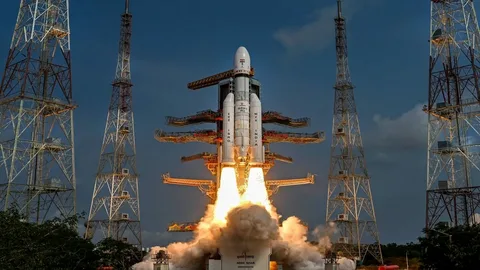
The successful deployment of HS-1 marks a transformative moment in Pakistan’s space journey. This achievement not only enhances the country’s technical capabilities but also provides powerful tools for addressing critical challenges in agriculture, environment, and urban development. As Pakistan continues to expand its space capabilities, HS-1 stands as a testament to the nation’s growing expertise in space technology and its commitment to using this knowledge for sustainable development and improved quality of life for its citizens.
Question for Readers :
How do you think advanced satellite technology like HS-1 can most benefit Pakistan’s development goals, and which application area excites you the most? Share your thoughts below!