



- Solar net metering
- Pakistan solar policy
- Buyback rate cut
- Rooftop solar
- Power Division proposal
- Solar net metering pakistan
Rethinking Solar Incentives :
The Pakistani government is considering a significant reduction in solar net metering buyback rates. This potential move comes amid concerns about the financial impact on conventional electricity consumers. The current rate of Rs22 per unit could be cut to approximately Rs11.30 per unit, reflecting changing energy economics.
Current Situation and Financial Impact :
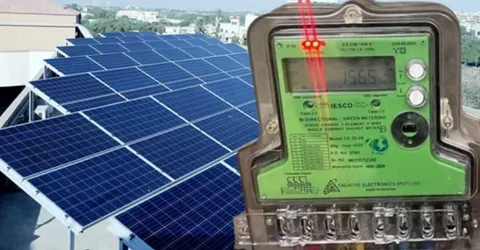
Official data reveals substantial losses in the power sector due to solar net metering. In FY2024, distribution companies lost 3.2 billion units in grid electricity sales. This translates to approximately Rs101 billion in lost revenue. Consequently, conventional consumers faced an average tariff increase of Rs0.90 per kWh to compensate for these losses.
Future Projections and Concerns :
The Power Division projects even more significant challenges ahead. By FY2034, they estimate grid sales could drop by 18.8 billion units. This would create a massive Rs545 billion financial impact. Such losses could force tariff hikes of Rs5-6 per unit for grid-dependent consumers, potentially making electricity unaffordable for many households.
Prime Minister’s Intervention :
Recognizing the seriousness of the situation, the Prime Minister has taken direct action. On October 22, he instructed the Power Division and NEPRA to thoroughly review the buyback tariff structure. The directive emphasizes verifying current rates and their broader impacts before implementing any net metering reforms.
Systemic Challenges Identified :
Energy officials highlight several structural issues with the current system. They note that net metering effectively functions as “battery storage for solar consumers.” Solar users can sell excess electricity at premium rates while avoiding fixed charges. This arrangement shifts system maintenance costs entirely to conventional consumers.
Economic Disparity in Power Pricing :
The pricing imbalance has become increasingly evident. New solar plants are contracting electricity at below Rs10 per unit. Meanwhile, net metering consumers receive Rs22 per unit for their surplus solar energy. Officials describe this difference as a “gross imbalance” that needs urgent addressing.
Proposed Solution and New Rates :
The Power Division has formulated a specific proposal to address these concerns. They recommend reducing the buyback rate to Rs11.30 per unit. This adjusted rate better reflects current energy economics and would help prevent further tariff escalation for grid-connected consumers.
Operational Challenges for Grid Management :
Beyond financial considerations, the rapid solar expansion creates operational difficulties. Pakistan’s winter electricity demand typically drops to 8,000-9,000 MW. With solar capacity now reaching 6,000 MW nationwide, daylight hours risk excess generation that the grid cannot efficiently manage.
Impact on Solar Investment :
This policy change could affect Pakistan’s renewable energy transition. While protecting conventional consumers, it might slow down solar adoption among residential and commercial users. The government must balance encouraging renewable energy with maintaining grid financial stability.
Stakeholder Reactions and Concerns :
Solar users and industry representatives express concern about the proposed changes. They argue that reduced rates might discourage solar investment. However, energy officials emphasize the need for a balanced approach that considers all electricity consumers’ interests.
Conclusion:
The net metering policy review represents a crucial moment for Pakistan’s energy future. While promoting renewable energy remains important, ensuring fair pricing for all consumers is equally vital. The government’s decision will shape solar energy’s role in Pakistan’s power mix for years to come.
Question for Readers:
How do you think reducing solar net metering rates will affect Pakistan’s renewable energy goals and electricity consumers? Share your perspective below!
4555? Dude, this site is legit. Been on it for a bit now and it’s pretty sweet. Check it out for yourself! 4555