




- Gaza partition
- yellow line
- Trump peace plan
- Israel-Hamas conflict
- humanitarian crisis
- Gaza future
- Middle East diplomacy
A Looming Division :
A de facto partition of Gaza is steadily taking shape, with the yellow line—initially a temporary demarcation under Trump’s ceasefire plan—now hardening into what may become a long-term border. As diplomatic efforts falter and reconstruction remains limited to Israeli-controlled zones, Gaza faces the grim prospect of indefinite division.
1. Stalled Diplomacy and a Failing Peace Plan
- Trump’s proposed roadmap, which included Israeli withdrawal, a transitional governing body, and a multinational security force, lacks implementation timelines and mechanisms.
- Hamas refuses to disarm, Israel rejects the involvement of the Palestinian Authority, and global powers hesitate to commit troops to a peacekeeping mission.
- A drafted UN Security Council resolution proposing a two-year transitional mandate has garnered little enthusiasm from potential participant nations.
2. The Yellow Line: From Symbol to Reality
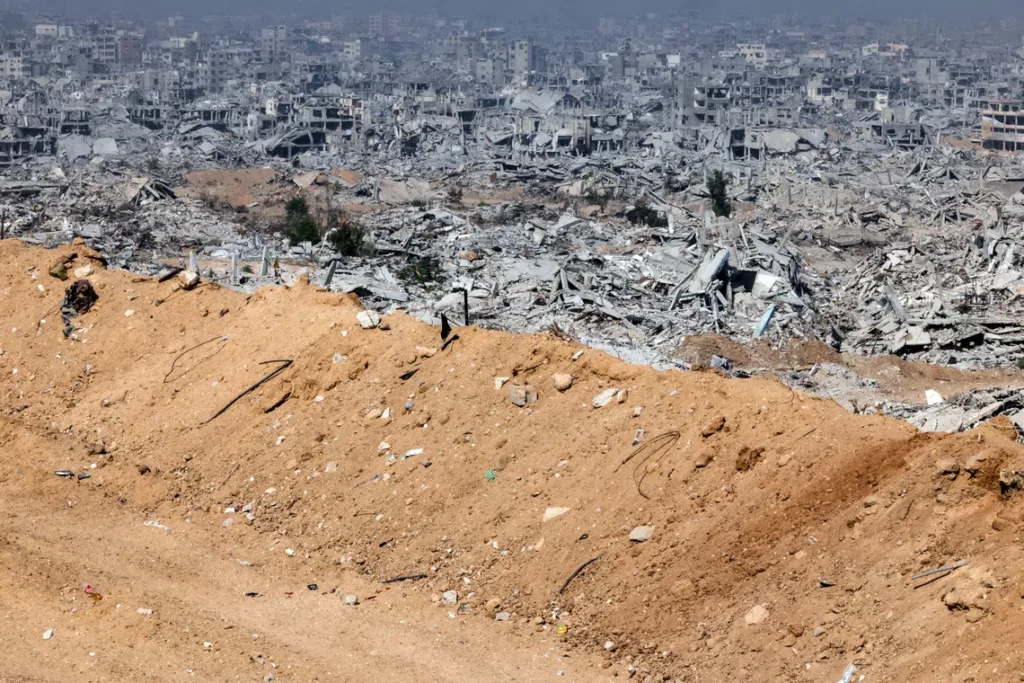
- Israeli forces have fortified the yellow line with cement blocks, bulldozed rubble, and newly laid infrastructure, creating a visible and militarized boundary.
- Satellite imagery reveals Israeli outposts and protective mounds in areas like Shejaiya, reinforcing the divide.
- With no political breakthrough, this line is increasingly seen as a permanent separation between Israeli-controlled territory and Hamas-influenced zones.
3. Reconstruction or Segregation?
- Reconstruction efforts are currently confined to the Israeli-controlled area, with U.S. officials like Jared Kushner proposing “model zones” for resettlement.
- Critics warn that such initiatives could normalize partition, leaving the rest of Gaza in ruins and its people in limbo.
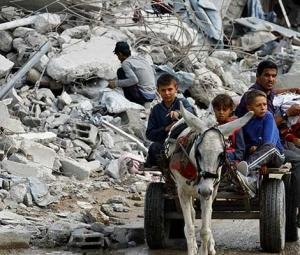
- Nearly two million Gazans remain displaced, living in tent camps amid the rubble of destroyed neighborhoods.
International Response and Concerns
World leaders express growing alarm about the situation. Britain’s Foreign Secretary Yvette Cooper warned that Gaza “must not get stuck in a no man’s land between peace and war.” Jordanian officials acknowledge the shared desire to end the conflict but question how to achieve workable solutions. The International Crisis Group warns that current proposals risk locking temporary arrangements into permanent reality.
Reconstruction and Division Plans
Recent statements from Trump administration figures suggest a new approach: beginning reconstruction in Israeli-controlled areas even without political progress. This strategy would create “model zones” offering improved living conditions, potentially drawing residents from Hamas-controlled territories and reinforcing the territorial division.
Regional Implications
The emerging partition carries significant regional consequences. A permanently divided Gaza could reshape Middle Eastern geopolitics, affect neighboring countries’ security calculations, and influence future Israeli-Palestinian negotiations. The situation also tests international commitment to Palestinian self-determination and territorial integrity.
An Uncertain Future
Gaza stands at a critical crossroads. Without renewed diplomatic momentum or significant policy changes, the temporary yellow line appears destined to become a lasting border. The international community faces urgent questions about how to prevent permanent partition while addressing legitimate security concerns and humanitarian needs. The coming months will likely determine whether Gaza moves toward reunification or formal division.
Questions for Readers:
Should the U.S. and UN prioritize breaking the political impasse or addressing Gaza’s humanitarian crisis first?
How can reconstruction efforts avoid cementing Gaza’s division?