



- Federal Reserve System explained
- What does the Federal Reserve do
- Federal Reserve structure 2026
- Fed monetary policy 2026
- Federal Reserve dual mandate
- FOMC interest rates 2026
- Federal Reserve Board governors
- Federal Reserve Bank functions
- Central bank of US
INTRODUCTION
Most Americans recognize the name Federal Reserve, yet few truly grasp how it shapes their everyday finances. Established in 1913 after a series of devastating bank failures, this institution functions as the nation’s central bank with a clear purpose: maintaining economic stability. Whether adjusting interest rates or overseeing financial institutions, its actions directly influence mortgage costs, job opportunities, and the prices people pay for goods. This article offers a straightforward look at the Federal Reserve System, breaking down its structure, responsibilities, and the reasons behind its political independence.
1. What the Federal Reserve System Is and How It Works
America’s central banking authority is known as the Federal Reserve System.Congress created it in 1913 through the Federal Reserve Act, aiming to bring stability to a banking system that had suffered from frequent and damaging financial panics throughout the 19th century. The Panic of 1907, which caused widespread bank runs and business failures, became the final push that convinced lawmakers a central bank was necessary .
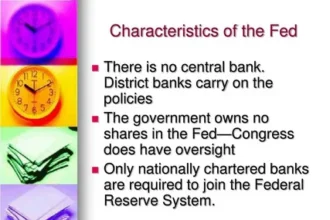
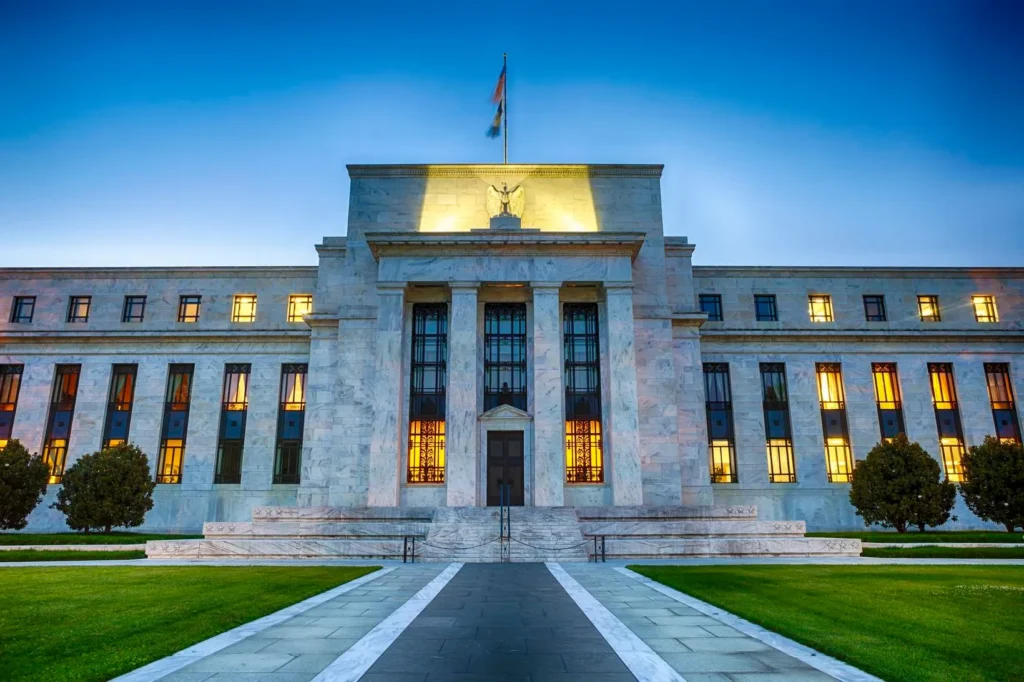
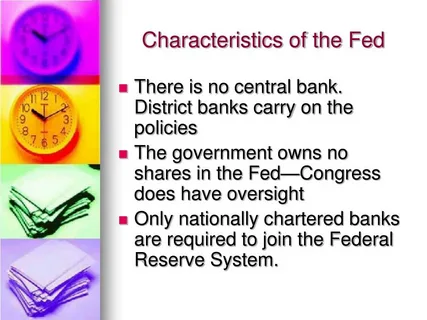
The Federal Reserve System is not a single organization but a carefully designed structure with three distinct entities that work together. The Board of Governors, located in Washington, D.C., serves as the governing body of the entire system. Seven members, called “governors,” serve on this board, each appointed to lengthy staggered terms to reduce political interference .
The 12 Federal Reserve Banks operate as the system’s decentralized operating arms. These regional banks are located in major cities across the country, including Boston, New York, Chicago, and San Francisco. Each Reserve Bank supervises local banks, enforces consumer regulations, and handles tasks like distributing currency and running electronic payment networks .
The Five Main Duties Assigned to the Federal Reserve
The Federal Reserve carries out five essential tasks that keep the economy functioning properly. First, it manages monetary policy to balance job creation and price stability. Second, it works to prevent financial disruptions from spreading. Third, it supervises banks to ensure they operate safely. Fourth, it guarantees that payment systems run smoothly. Fifth, it advocates for consumer protection and supports local community development .
2. How the Federal Reserve System Makes Monetary Policy
The Federal Open Market Committee (FOMC) holds the power to set monetary policy. This 12-member group meets eight times a year to decide on interest rate targets. The committee includes all seven Board members, the president of the New York Fed, and four of the other 11 Reserve Bank presidents who serve on a rotating basis .
How Interest Rate Decisions Reach Your Wallet
The FOMC’s primary tool is the federal funds rate, which is the interest rate banks charge each other for overnight loans. When the committee lowers this rate, borrowing becomes cheaper across the economy. When the Fed pushes rates upward, borrowing costs rise, which tends to slow down economic activity and keep inflation under control .
Changes in the federal funds rate trigger a chain of events that affect other short-term interest rates, foreign exchange rates, long-term interest rates, and ultimately employment, output, and prices of goods and services .
The June 2026 Interest Rate Decision
At its June 2026 meeting, the Federal Reserve voted unanimously to hold interest rates steady, keeping the benchmark rate at a target range of 3.50% to 3.75% . This marked the fourth consecutive meeting without a rate change. The decision came during Kevin Warsh’s first meeting as the new Fed Chair, who introduced a shorter policy statement that emphasized the committee’s commitment to price stability .
The Fed’s latest projections show the federal funds rate reaching 3.8% by the end of 2026, suggesting that at least one rate hike is possible before the year ends. Markets currently price in one 25-basis-point rate hike by October 2026 .
3. The Federal Reserve System’s Two Big Goals
Congress gave the Federal Reserve a clear mission: pursue maximum employment and stable prices. These twin goals, often called the “dual mandate,” guide every major decision the Fed makes .
- What Maximum Employment Means
Maximum employment refers to the highest level of job growth the economy can sustain without pushing inflation too high. This level shifts over time based on factors like demographics and technology. Unlike price stability, maximum employment has no numerical target and cannot be directly measured. The Fed watches many labor market indicators to gauge where things stand .
- What Price Stability Means
Price stability is defined by the Fed as inflation running at 2 percent annually, measured by personal consumption expenditures. The committee believes that keeping expectations anchored at this level supports steady prices and manageable long-term interest rates .
- The Current Inflation Picture
In May 2026, the Consumer Price Index rose 4.2% over the last 12 months, primarily driven by rising energy prices linked to the Iran conflict. However, core CPI, which excludes volatile food and energy prices, was up 2.9% year-over-year, suggesting that elevated inflation could be short-lived if the conflict eases .
4. Why the Federal Reserve System Stays Independent from Politics
The Federal Reserve was designed to operate independently from the rest of the government. This means the President cannot reverse the Fed’s monetary policy decisions, a feature intended to protect the economy from short-term political maneuvering .
- The Case for Political Independence
Lawmakers have consistently affirmed the importance of Federal Reserve independence. Former Fed Chair Jerome Powell warned in June 2026 that mounting political pressure on the central bank could damage public confidence in its independence and decision-making. Powell stated that attempts by any administration to remove Fed officials over policy disagreements would create a dangerous precedent for future governments .
- New Leadership in 2026
In May 2026, Kevin Warsh took over as the new head of the Federal Reserve, bringing a different approach to how the central bank communicates with the public. At his first press conference, Warsh introduced a shorter policy statement with less forward guidance. He also confirmed that he did not submit his own interest rate projections for the “dot plot,” a notable departure from tradition .
5.The Federal Reserve’s Role in Bank Oversight and Payment Networks
Beyond monetary policy, the Federal Reserve plays a crucial role in supervising and regulating financial institutions.Under strict oversight rules, the Federal Reserve supervises bank holding firms, certain state-level banks, and American branches of foreign financial institutions.
5. The Federal Reserve’s Role in Bank Oversight and Payment Networks
Under strict oversight rules, the Federal Reserve supervises bank holding firms, certain state-level banks, and American branches of foreign financial institutions. This supervision helps ensure that these institutions operate safely and comply with applicable laws.
- Oversight of Payment Systems
The Federal Reserve also operates parts of the wholesale payment system, competing with the private sector in certain areas. At the same time, it establishes risk-management standards for private payment system operators. This dual role helps ensure the overall stability and security of the financial system.
- Congressional Oversight
The Fed Chair testifies before congressional committees twice a year, explaining recent policy actions and economic projections. The Fed also publishes detailed meeting minutes and economic forecasts, providing transparency that helps build public trust.
Conclusion
The Federal Reserve System stands as one of the most influential institutions in American life, guiding the economy for more than a century. Through its three component parts and diverse policy instruments, it works to achieve full employment and stable prices for every citizen. Its freedom from political interference remains vital for navigating complicated economic challenges with a long-range perspective.
FREQUENTLY ASKED QUESTIONS(FAQs)
1. What is the Federal Reserve System in simple terms?
The Federal Reserve System is the central bank of the United States, responsible for managing the money supply, supervising banks, and promoting economic stability.
2. What functions does the Federal Reserve perform in the economy?
The Fed performs five main functions: conducting monetary policy, promoting financial stability, supervising and regulating banks, maintaining the payment system, and supporting consumer protection and community development.
3. How does the Federal Reserve affect ordinary people?
Through its interest rate decisions, the Fed influences borrowing costs for mortgages, credit cards, and auto loans. These decisions also affect job growth and the overall prices of goods and services.
4.What is the Fed’s “dual mandate”?
The dual mandate refers to Congress’s directive for the Fed to pursue both maximum employment and stable prices.
5.Who runs the Federal Reserve?
The Fed is led by the Board of Governors in Washington, D.C., consisting of seven members appointed by the President and confirmed by the Senate. Kevin Warsh became Chair in May 2026.